What to do if your basement floods
What to do if your basement floods Clear, calm, plain-language guidance from Steady Restore - an
If your home is dealing with sudden flooding, a burst pipe, or electrical hazards, acting quickly and safely matters. This guide shares calm, plain-language steps for turning off water and power in an emergency—so you can reduce damage and help keep your household safer.
If you smell gas, see sparks, or have any chance of active fire or falling hazards, back away and call your local emergency number right away. Don’t touch electrical panels or wet wiring if you’re standing in water or the area is damp.
When it’s safe to do so, keep track of what you shut off (for example, the water main or specific circuit). This can help a restoration professional later understand what was affected. If you need additional help, you can use Steady Restore to find certified home restoration professionals for property damage recovery—free for property owners. Find a pro when you’re ready.
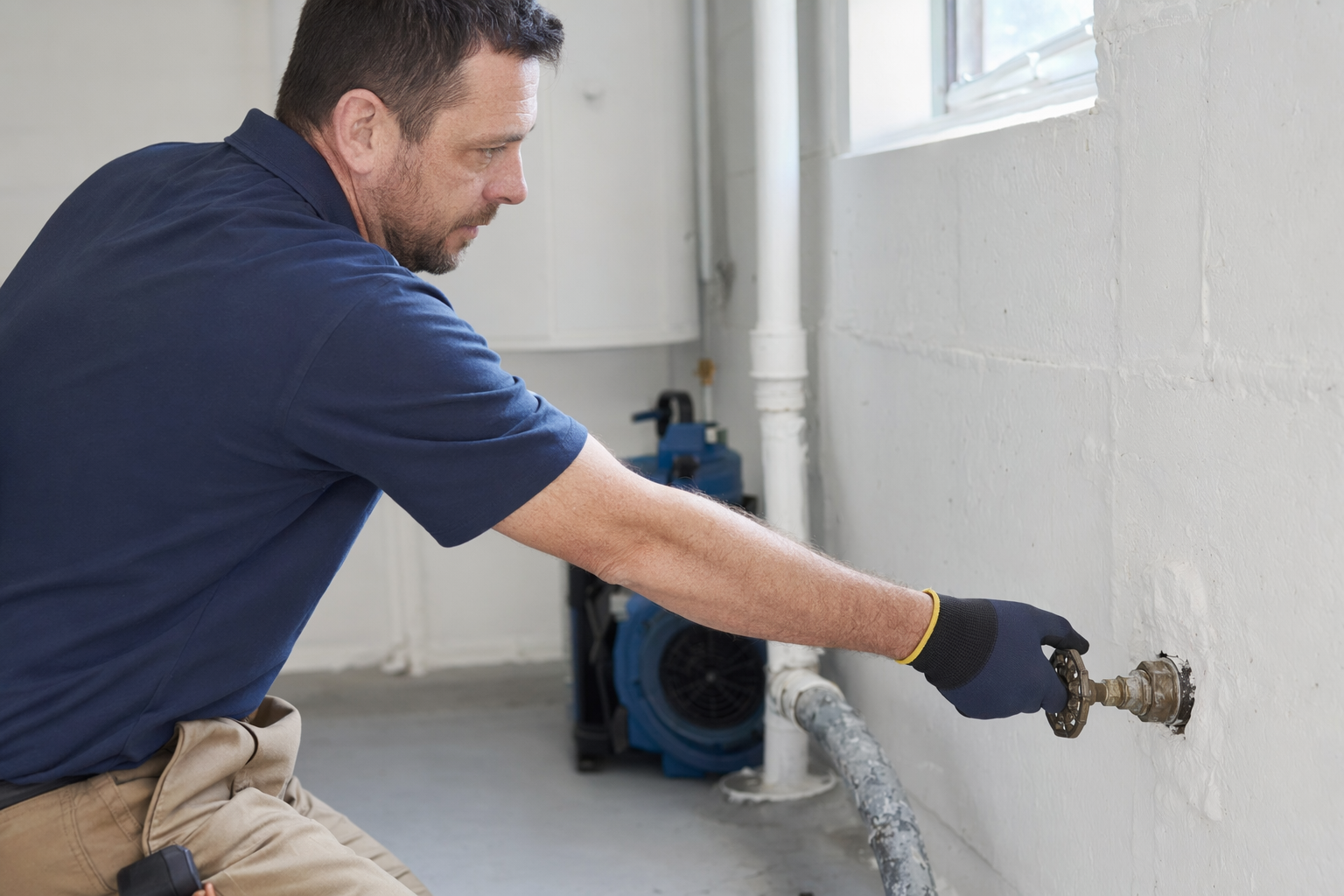
To stop water from spreading, locate your home’s main shutoff valve. Common locations include near the water meter at the street, in a basement, crawlspace, utility room, or garage. Turn the valve slowly—avoid forcing it if it’s stuck.
If water is already flooding an area, try not to wade through it. If the shutoff valve is in a flooded space, pause and focus on making the power safe first (see the next section). For additional steps on protecting property during an emergency, see What to do now after property damage.
If there’s electrical risk—such as water near outlets, buzzing sounds, flickering lights, or visible damage—turn off power. Use your electrical panel (breaker box) and switch off the main breaker or the specific breaker(s) that serve the affected area.
Important: do not open the panel or touch breakers if the panel area is wet or you’re standing in water. If any part of the system looks damaged, smells like burning, or you’re unsure, stop and call for help. Restoring after a water event often involves drying and inspection; certified teams can assess conditions safely. Learn about restoration services and how they help.
Once water and power are off, step back and let the situation stabilize. If it’s safe, you can move valuables to higher ground and keep doors/windows as appropriate for airflow—but avoid creating conditions that risk electrical contact.
Take photos or short videos of the damage (before cleanup if possible). This can help when you talk with restoration professionals and insurers. If you’re planning your recovery, review restoration basics and timelines for what often happens next. Costs vary widely by case, location, and the extent of damage; as a general estimate, drying and mitigation after water damage commonly runs from a few hundred to several thousand dollars, with more extensive jobs costing more.
Steady Restore is a free information and matching service that helps property owners in the US find certified home restoration professionals after property damage. We’re not a restoration contractor, and we can’t promise a specific timeline or outcome.
If you want to get connected, share general contact details and your situation. You’ll be matched with appropriate, certified professionals in your area. Start here: Get matched. Help is available in your own language when you need it.
It varies by home. Many homes have a main shutoff near the water meter (often near the street) or inside a utility area like a basement, garage, or crawlspace. If you can’t find it quickly, check the owner’s manual or contact a local plumber for guidance.
If water and electricity may be in contact or you see electrical warnings, turning off power first is often the safer approach—only if you can do it safely. If the breaker panel is wet or you’re standing in water, stop and call for help.
Try turning them slowly and steadily. Don’t force a stuck valve or breaker—forcing can damage components. If it’s stuck and water is spreading, focus on safe evacuation/containment and contact qualified help.
As a rough estimate, costs often range from a few hundred to several thousand dollars, depending on how much water, how long it was present, materials affected, and your city/state. More extensive damage can cost more. A certified professional can assess your specific situation.
What to do if your basement floods Clear, calm, plain-language guidance from Steady Restore - an
What to do right after a house fire Clear, calm, plain-language guidance from Steady Restore - a
What to do when sewage backs up into your home Clear, calm, plain-language guidance from Steady
Free for property owners. Certified, insured pros. No pressure.