Water Damage Restoration
Standing water, a flooded basement, or a burst pipe? Learn how water damage restoration wo
A sewage backup is more than a bad smell or a messy floor. It can carry bacteria, viruses, and other contaminants that make the area unsafe to touch or breathe around. When wastewater comes up through drains, toilets, sinks, or floor drains, cleanup needs to be handled carefully and completely. Steady Restore is a free information and matching service for property owners in the US. We share general educational information and can help you connect with certified restoration professionals in your area. If you need support, help may be available in your own language.
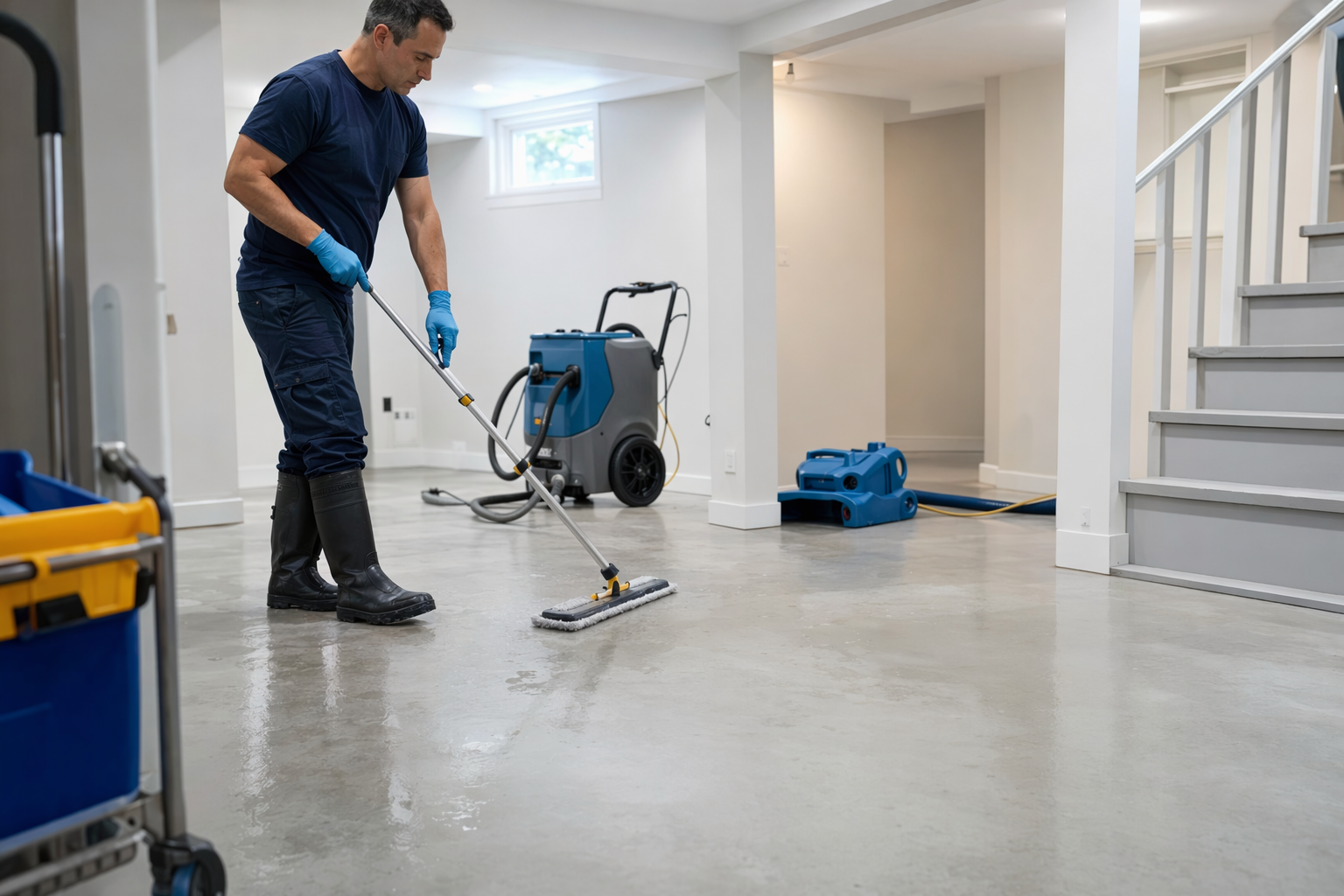
Sewage and heavily contaminated water are often called Category 3 water, meaning water that may contain harmful germs, waste, and toxins. This kind of damage can spread quickly into flooring, drywall, insulation, cabinets, and air spaces. Even if the visible water is gone, contamination can remain behind.
This is not usually a safe do-it-yourself cleanup. People can be exposed through skin contact, accidental ingestion, or breathing in droplets and particles. Fast action can reduce further damage, but the right response also includes protecting health and preventing contamination from spreading to other parts of the property.
Professional sewage cleanup usually starts with a safety assessment and stopping the source if possible. The crew may set up containment, which means barriers and airflow controls that help keep contaminated material from moving into clean areas. They then remove standing sewage and damaged materials that cannot be safely cleaned, such as some carpet pad, drywall, insulation, or porous contents.
After removal, technicians clean and disinfect affected surfaces using products made for contaminated losses. They also dry the structure with specialized equipment because moisture left behind can lead to additional damage and mold growth. Depending on the situation, they may document moisture readings, inspect hidden areas, and explain what can likely be cleaned versus what may need replacement.
Non-porous materials, which are hard surfaces that do not easily absorb water, may sometimes be cleaned and disinfected. Examples can include certain tile, metal, glass, and some sealed surfaces. Porous materials, which soak up contamination, are much harder to restore safely. These can include carpet padding, insulation, ceiling tiles, upholstered items, paper goods, and some unfinished wood products.
Whether something can be saved depends on the source of the backup, how long the contamination sat, the material type, and local conditions. A certified professional can help sort items into categories such as restorable, questionable, or non-restorable. If you are unsure what to do first, see what to do now for general next steps.
Sewage backup cleanup costs vary widely based on how much area was affected, where the contamination spread, how long it sat, and what materials need removal and replacement. In many US cases, professional cleanup may range from about $2,000 to $8,000+ for smaller to mid-sized losses, while larger or more complex jobs can run $10,000 to $25,000+. If structural repairs, flooring replacement, cabinet work, or major reconstruction are needed, total project costs can be higher.
These are general estimates, not quotes or guarantees. Costs can vary by case, property type, city, and state. Access difficulty, after-hours emergency service, testing, demolition, drying time, and reconstruction all affect the final price. You can learn more about related recovery services at services or request help through get matched.
Because sewage losses involve health risks, it is smart to look for professionals with restoration training and experience handling contaminated water. Ask whether they follow recognized cleaning and drying practices, how they separate contaminated areas, and how they decide what materials must be removed. Clear communication matters, especially when decisions affect flooring, walls, personal items, and the timeline for safe re-entry.
Steady Restore does not perform restoration work. We provide free educational information and help property owners connect with certified professionals; the professionals pay a flat fee to participate, never a percentage. We only ask for general contact details so we can help with the match, and we do not ask for medical or identity records. For more background, you can also explore our guides.
Usually, no. Sewage-contaminated water can expose you to harmful bacteria, viruses, and other contaminants. Small splashes on a hard surface may sometimes be manageable with proper protective gear, but broad contamination, soaked materials, or water that entered from drains or toilets is generally best handled by trained professionals.
As soon as it is safe to do so. Fast action can reduce spreading, odor, and damage to floors, walls, and contents. If the source is still active, avoid contact with the water, keep people and pets away, and contact qualified help promptly.
Sometimes, but coverage depends on the cause of loss and the details of your policy. Some policies may cover certain backup events only if you added specific endorsements, which are optional coverage add-ons. A restoration professional can document conditions, but coverage decisions are made by your insurer.
Usually just general contact details and basic information about the property and damage, such as your location, where the backup happened, and when it started. Steady Restore does not ask for medical records or identity records, and help may be available in your preferred language.
Standing water, a flooded basement, or a burst pipe? Learn how water damage restoration wo
After a house fire, smoke and soot keep causing damage. Learn how fire and smoke restorati
Found mold after a leak or flood? Learn how professional mold remediation works, when you
After a death, accident, or biohazard, certified technicians clean and decontaminate with
After a storm, fast action limits further damage. Learn how storm-damage restoration works
Free for property owners. Certified, insured pros. No pressure.