Water Damage Restoration
Standing water, a flooded basement, or a burst pipe? Learn how water damage restoration wo
If you’ve found mold after a leak, flood, or damp building materials, you’re not alone—and you don’t have to figure it out by yourself. Steady Restore is a free information and matching service that can help you find certified home restoration professionals in the US who handle mold remediation and removal.
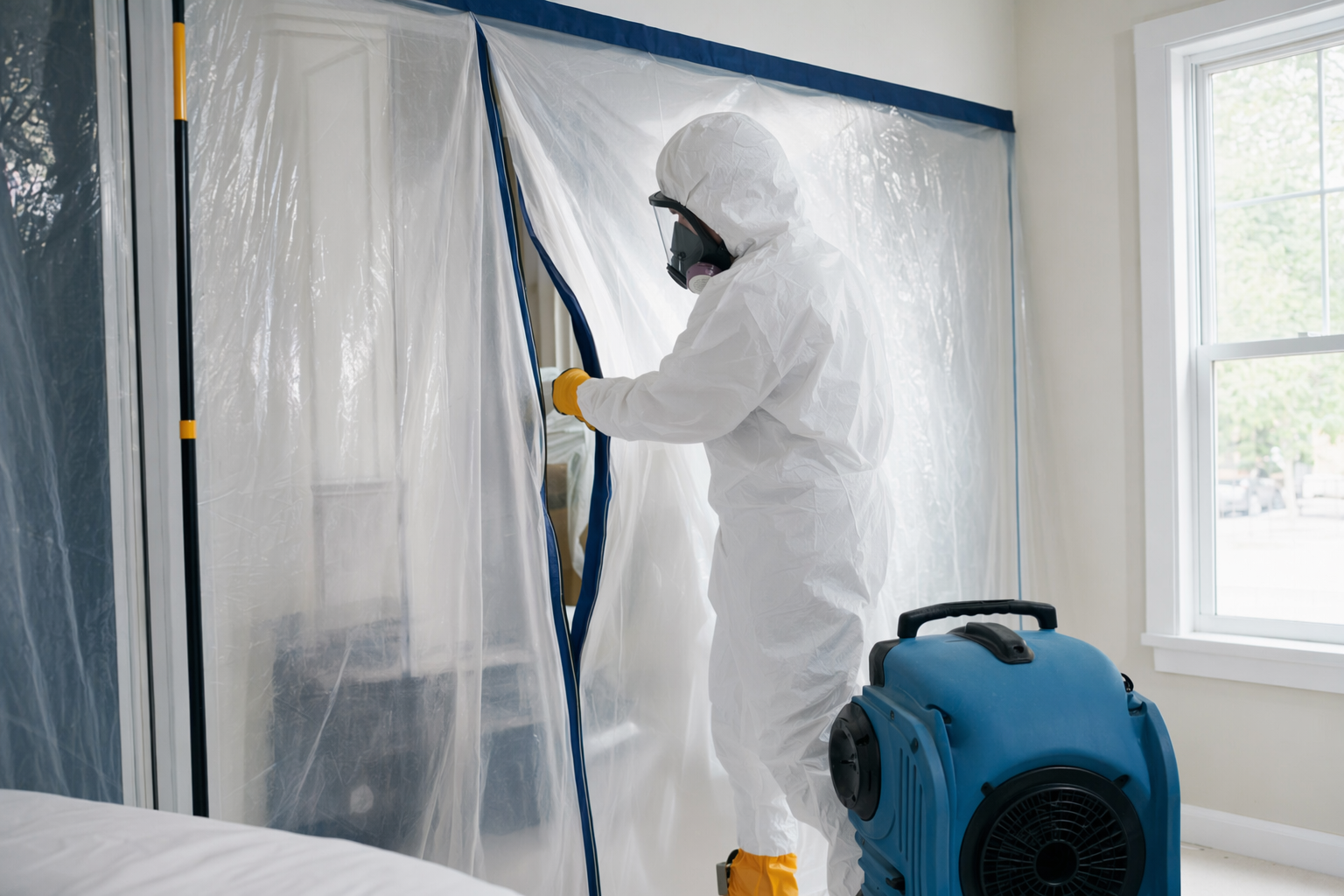
Mold remediation is the process of removing contaminated materials and fixing the moisture problem that caused the mold to grow in the first place. Because mold can spread through air and surfaces, safe remediation usually involves setting up containment, cleaning affected areas, and properly drying the property.
If you’re unsure whether you need mold remediation, start with the basics: address the leak or water source first, then assess the extent of mold and damaged materials. Professionals may use tools like moisture meters to confirm what’s still damp. If you’d like a step-by-step checklist, see what to do now.
Consider contacting a certified specialist if mold covers a large area, you have recurring moisture issues, or the affected area includes HVAC systems, drywall, insulation, or other porous materials. Mold can also be hidden inside walls or under flooring, especially after leaks.
A professional team can also help you plan for safe removal and drying, and they can advise on what can be kept versus what should be removed. This is especially important if you have health concerns for anyone in the home. If you need guidance on choosing the right help, visit services and guides.
While every case is different, certified mold remediation commonly follows a similar flow: (1) inspection and moisture mapping, (2) containment to limit mold spread, (3) cleaning/removal of moldy materials, (4) drying and air management, and (5) verification steps to support cleanup goals. “Containment” means sealing off the work area to reduce the chance of mold traveling to other rooms.
A reputable contractor should explain the plan in plain language, including what they will remove, how they will protect your home and belongings, and how they will address moisture so the problem doesn’t return. You can also learn more in mold guides.
Costs vary widely based on the cause of water damage, how much material is affected, which materials are involved (drywall vs. insulation vs. flooring), your city and state, and whether additional water restoration steps are needed. As rough US estimates, many homeowners spend a few hundred to several thousand dollars for smaller, contained jobs, while larger or more complex cases can cost tens of thousands when multiple rooms, structural materials, or extensive drying are involved.
Because mold remediation is closely tied to water damage, the total price may include water extraction, drying, removal of affected porous materials, labor for containment and cleaning, and sometimes reconstruction. For more help budgeting and planning, see how to prepare.
Steady Restore is free for property owners. We ask for general property and contact details so we can match you with appropriate, certified restoration professionals—without requiring sensitive medical or identity records.
If you’d like to get matched, start here: get-matched. You can request help in your own language when it’s available, and we’ll help connect you with the right type of specialist for your situation.
Small, limited cases of surface mold may be handled with proper precautions, but many situations require a pro—especially after leaks, when porous materials are involved, or when the area is large or keeps coming back. A professional assessment can help confirm the source of moisture and the full extent of affected materials.
Testing may be helpful in some cases, but it’s not always required for every situation. Certified teams often focus on correcting the moisture source and remediating affected materials. What’s needed depends on the size of the problem, materials involved, and your local conditions.
Timelines vary based on the cause of the moisture, how widespread the contamination is, drying needs, and material removal. A specialist can provide an estimate after inspecting the affected areas and confirming what’s still damp.
Mold can return if the underlying moisture problem isn’t resolved. That’s why professional remediation typically includes drying and addressing water intrusion or humidity issues—not just cleaning visible mold.
Standing water, a flooded basement, or a burst pipe? Learn how water damage restoration wo
After a house fire, smoke and soot keep causing damage. Learn how fire and smoke restorati
A sewage backup is a health hazard, not a mop job. Learn how professional sewage cleanup w
After a death, accident, or biohazard, certified technicians clean and decontaminate with
After a storm, fast action limits further damage. Learn how storm-damage restoration works
Free for property owners. Certified, insured pros. No pressure.