What to do if your basement floods
What to do if your basement floods Clear, calm, plain-language guidance from Steady Restore - an
If sewage backs up into your home, it’s understandable to feel overwhelmed. The good news is that there are clear safety steps you can take right away—then a plan to contact certified restoration professionals who can help you clean up and dry the affected areas properly. This guide is educational and doesn’t replace professional assessment.
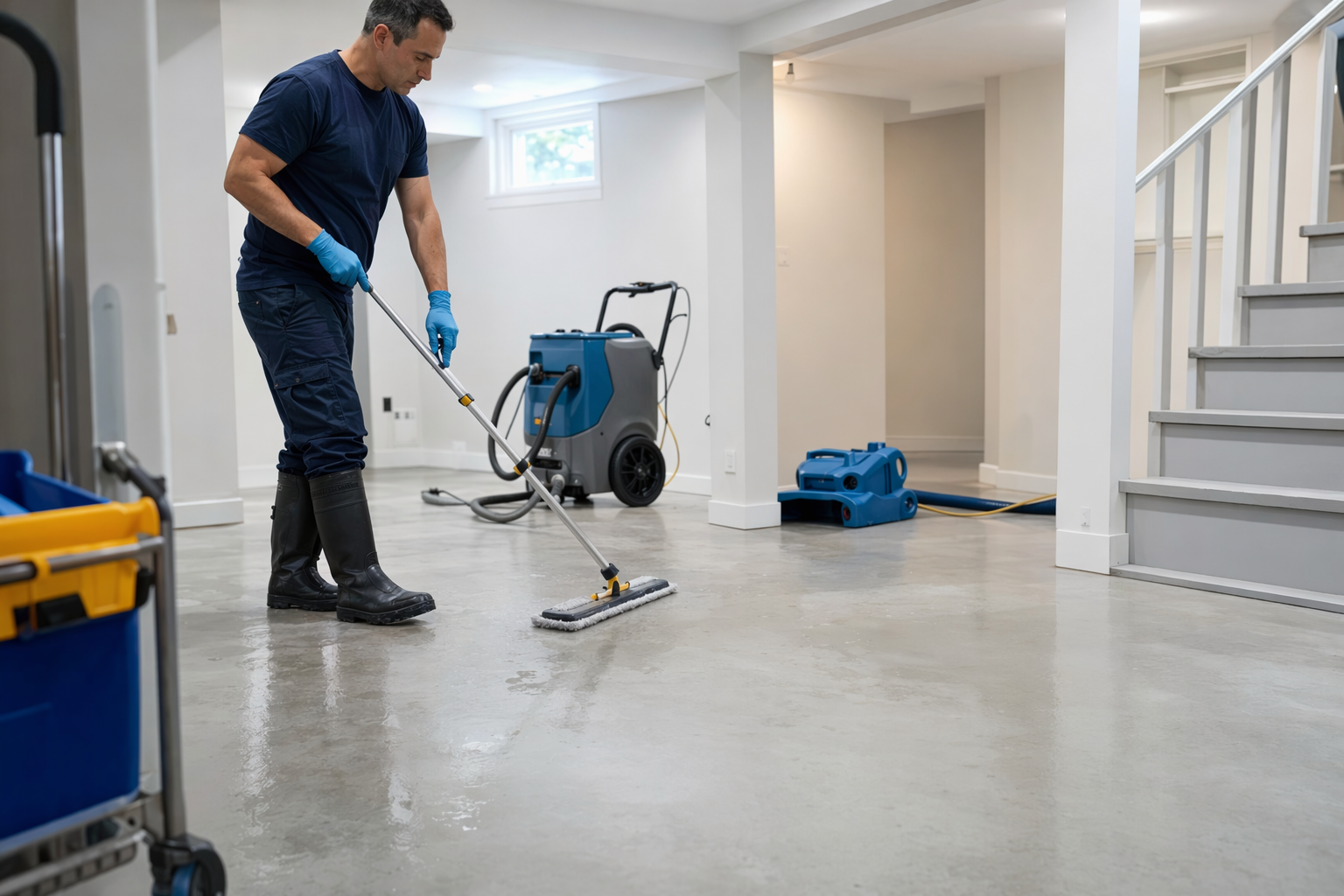
Stop using the affected plumbing if possible and keep people and pets away from the area. If sewage is actively flowing, or you notice strong odors, dark standing water, or splashing, it’s a sign to act quickly and safely.
If you can do so without risk, shut off power to outlets and appliances near the contaminated water. Avoid touching the water or materials it soaked. Wear protective gear if you must be near it (gloves and a mask rated for particulates), and avoid breathing in fumes. If anyone has symptoms like dizziness or nausea after exposure, leave the area and seek medical advice.
If you’re unsure whether electrical systems could be affected, contact your utility company or a licensed electrician before attempting cleanup. You can also start the restoration matching process early—help is available in many languages through your chosen provider.
Do not try to “just hose it down.” Sewage can contain harmful germs, and spreading it around can increase damage. Avoid using a household vacuum unless it’s specifically rated for wet, contaminated materials.
Try not to remove large amounts of wet drywall, insulation, or flooring yourself unless the area is safe and you’re following proper procedures. Removing materials too early (or without containment) can spread contamination and make it harder to dry the structure.
Also, don’t wait too long to address moisture. Even after the visible water is gone, wet materials can keep lingering moisture that leads to odors and growth of mold. Time matters, but the safest next steps always come first.
Sewage backups usually involve both sanitation cleanup and water damage restoration. Restoration pros use steps like water extraction, drying, and decontamination. Decontamination means cleaning affected surfaces and materials to reduce contaminants to safer levels.
When you’re ready, you can use Steady Restore to find certified professionals in your area. Our service is free for property owners, and professionals pay a flat fee (not a percentage). You’ll share general contact details and basic property information—no medical or identity records are needed.
If you have an insurance policy, ask your provider about documentation. Many insurers want photos and a note of when the problem started, what was affected, and what mitigation steps you took—so keep things organized.
While every case is different, a certified team often begins with an on-site inspection and safety checks. They may identify the affected “categories” of water based on contamination level, then create a plan to remove sewage-contaminated materials and control the affected area.
Next, they usually use extraction and commercial drying equipment. Moisture mapping means measuring moisture in building materials to confirm what’s still wet behind surfaces. This helps guide what needs to be removed and what can be dried.
Finally, they may recommend cleaning and, in some cases, repairs. Costs can vary widely depending on how far the sewage spread, flooring type, building materials, bathroom/kitchen layout, and your city and state. As a rough estimate, many homeowners spend anywhere from a few hundred to several thousand dollars, and severe cases can be higher—especially if drywall, subfloor, or insulation must be removed. ]
To learn more about next steps, see what-to-do-now and browse services.
• Keep people/pets out of the area.
• If safe, shut off power near affected outlets/appliances.
• Stop the source if you can (for example, shut off the water supply to the toilet) and call for help if it’s not stopping.
• Take photos for insurance (only if safe).
• Ventilate if possible, without increasing exposure to fumes.
• Start matching certified restoration professionals so cleanup and drying can begin promptly.
When you’re ready, you can begin the free match at get-matched. For broader preparation tips, visit guides.
Often, sewage backups need both. A plumber can address the cause (like a clogged drain or broken pipe), while a certified restoration company handles cleanup, decontamination, and drying. If you’re unsure, ask the restoration pro what coordination they recommend for your situation.
Visible water and odors are good signs, but not always enough. Certified teams typically confirm drying with moisture readings. **Moisture readings** help verify that materials like drywall and subfloor aren’t still wet behind surfaces.
Costs vary based on the extent of contamination, materials affected (carpet, drywall, insulation), required demolition, and your location. As a general US estimate, many homeowners see costs from a few hundred to several thousand dollars, with higher totals possible for extensive damage. Your final cost depends on your case—so it’s best to get an on-site assessment.
Moisture left in materials can increase the risk of mold and persistent odors. That’s why timely water extraction and drying matters. A certified restoration team can help determine what needs to be removed and what can be dried.
What to do if your basement floods Clear, calm, plain-language guidance from Steady Restore - an
What to do right after a house fire Clear, calm, plain-language guidance from Steady Restore - a
What to do when a pipe bursts Clear, calm, plain-language guidance from Steady Restore - and a f
Free for property owners. Certified, insured pros. No pressure.