What to do if your basement floods
What to do if your basement floods Clear, calm, plain-language guidance from Steady Restore - an
Water and other property damage can threaten irreplaceable items like passports, birth certificates, family photos, and computers with important files. The good news: many documents and photographs can be salvaged if you act quickly and handle them gently. Below is calm, practical guidance to help you reduce damage while you arrange professional help.
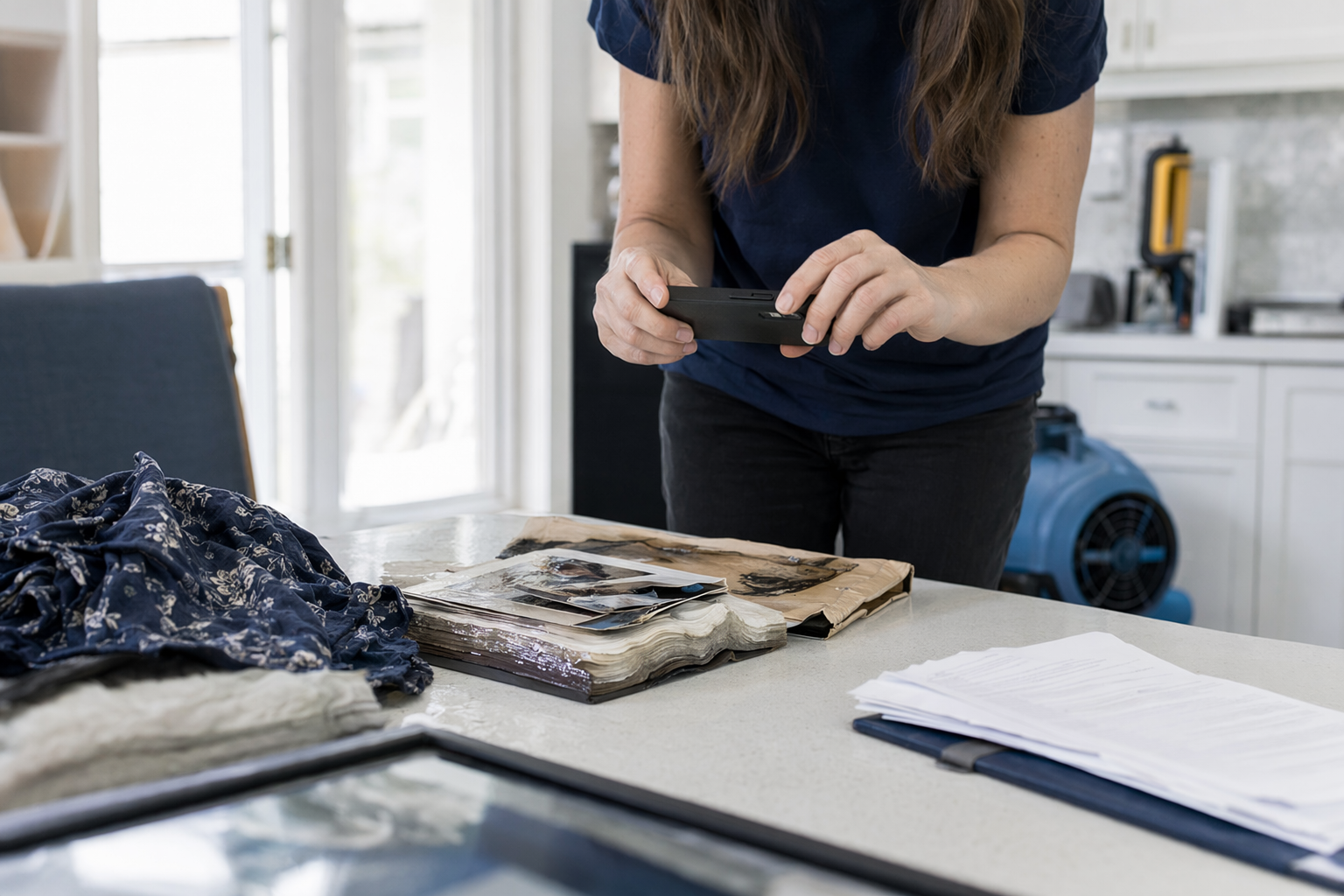
Before you touch anything, make sure the area is safe. If water is still coming in or the electricity may be affected, wait for a licensed professional to confirm it’s safe. Wear gloves and a mask if materials are moldy or dusty.
If you can, stop the source of water (for example, turn off the main valve or stop a leak). Then begin drying—air movement and controlled humidity help prevent further swelling, warping, and mold growth. If the damage is from sewage (blackwater), treat it as higher risk and consider professional cleanup sooner.
Gather important paper items first (birth certificates, insurance policies, legal documents, tax records). Take them out carefully and separate them into categories so they don’t stick together.
For wet documents, keep pages apart. Place sheets on wax paper or clean paper, then fan the stack lightly. If pages are stuck, don’t pull them apart forcefully—freezing or professional handling may help prevent tearing. If you notice ink running, prioritize drying and avoid heat sources that can set ink and cause further distortion.
Loose photographs usually salvage better than photos embedded in albums. Handle by the edges to avoid rubbing the emulsion (the image layer). If photos are stuck together, keep them in place rather than trying to separate them while wet.
Rinse is generally not recommended unless a restoration pro instructs you—rinsing can spread contaminants. For drying, lay photos flat when possible, or prop them so water can drain. Avoid direct sunlight and high heat; both can fade images and damage paper.
Mold can start forming within 24–48 hours after water exposure, depending on temperature and materials. The faster you remove wet items and improve drying conditions, the better your chances.
A certified restoration professional can assess what’s safe to DIY, what should be frozen or handled with specialized drying methods, and how to prevent cross-contamination. If you want a free way to find nearby certified pros, you can get matched. You’ll only share general contact details—no medical or identity records.
Not always. Many items—especially unstained or only slightly damp documents and photos—can be salvaged with careful drying. The safest next step is to separate items, keep them from sticking, and consult certified restoration guidance for any that are heavily wet, contaminated, or stuck together.
It’s usually not recommended. High heat and blowers can warp paper, cause emulsion damage, and make ink run. Instead, use gentle air circulation and controlled drying, and ask a restoration pro about the best method for your specific items.
Sewage water can contain harmful microbes. Keep people and pets away, avoid touching the materials unless it’s safe, and consider professional cleanup sooner. In those cases, restoration pros may use specific containment and disinfecting procedures before attempting salvage.
Costs vary widely by case, including the type of damage, how many items were affected, how soaked they are, and your city/state. As a rough estimate, minor salvage efforts may be lower, while large freeze-drying or extensive recovery can be more expensive. A certified pro can explain the likely approach after inspecting the property.
What to do if your basement floods Clear, calm, plain-language guidance from Steady Restore - an
What to do right after a house fire Clear, calm, plain-language guidance from Steady Restore - a
What to do when sewage backs up into your home Clear, calm, plain-language guidance from Steady
Free for property owners. Certified, insured pros. No pressure.