What to do if your basement floods
What to do if your basement floods Clear, calm, plain-language guidance from Steady Restore - an
Small areas of mold can sometimes be cleaned by a homeowner, but not every mold problem is safe to handle alone. The right choice depends on how much mold you see, where it is growing, what got wet, and whether anyone in the home has breathing issues, allergies, or a weakened immune system. If you are unsure, it is reasonable to pause and get expert help. Steady Restore provides general educational information and a free way to help property owners in the US connect with certified restoration professionals. We are not a restoration contractor, and we do not give quotes or guarantees. If you want help, you can [get matched](/get-matched/) with local professionals, and help may be available in your preferred language.
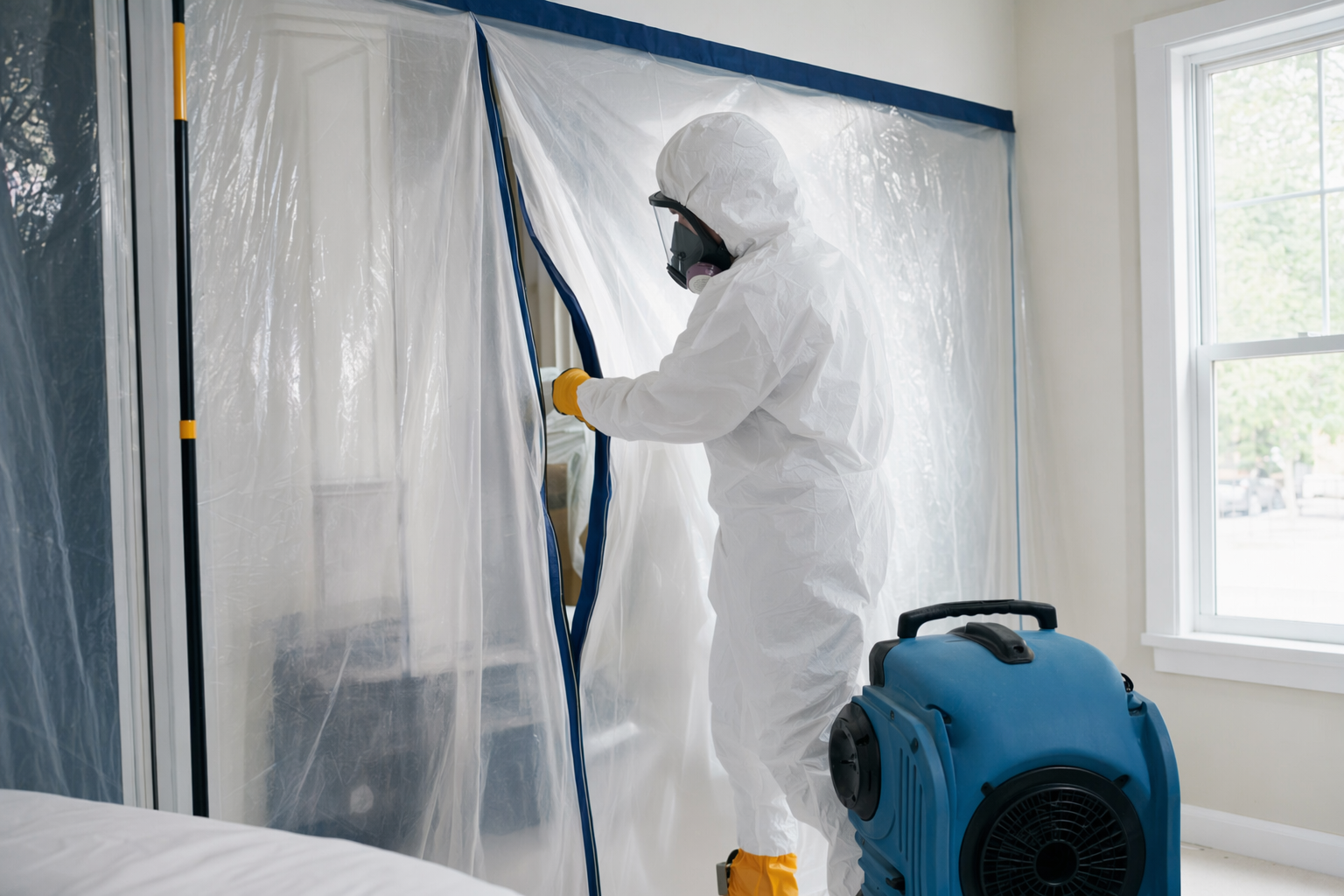
A small cleanup may be manageable if the mold covers only a limited area, the material is not badly damaged, and the moisture source has been fixed. In plain terms, that usually means a small patch on a hard surface like tile, glass, or sealed metal rather than mold that has spread through walls, insulation, carpet padding, or ceilings.
DIY cleanup is generally lower risk when you can work safely, ventilate the area, and keep other people away during cleaning. You should stop and reassess if the mold keeps coming back, has a strong musty odor, or seems connected to a hidden leak behind a wall or under flooring.
If you want a practical first-step checklist before doing anything, see what to do now.
Professional help is often the safer choice when mold covers a larger area, keeps returning, or follows major water damage from a burst pipe, roof leak, sewage backup, or flooding. It is also smart to call a pro when mold is inside HVAC systems, which means heating, ventilation, and air conditioning equipment, because spores can spread through the home.
You may also want a certified restoration professional if mold is growing on porous materials. Porous means the material can soak up water, such as drywall, insulation, ceiling tiles, carpet, and some wood products. These materials often cannot be fully cleaned once mold has grown into them and may need removal.
If anyone in the home has asthma, severe allergies, COPD, or a weakened immune system, a pro is usually the safer route. You can learn more about available services or get matched for free.
For a small surface problem, cleanup usually means wearing gloves, eye protection, and an appropriate face covering, isolating the area as much as possible, cleaning visible growth from non-porous or semi-sealed surfaces, and drying everything completely. The drying step matters because mold returns when moisture remains.
DIY cleanup does not fix hidden moisture, contaminated insulation, or mold growing inside wall cavities, subfloors, or ductwork. It also does not replace professional containment, which means barriers and airflow controls used to keep spores from spreading to other rooms during cleanup.
If the source of moisture is still active, cleaning alone is unlikely to solve the problem for long. Our guides can help you understand the next step if you are not sure what caused the mold.
Before cleaning, stop the water source if you can and dry the area as much as possible. Open windows if conditions allow, and keep children, older adults, pets, and anyone with breathing problems away from the work area. Do not mix cleaning chemicals.
Bag and remove heavily damaged items that cannot be cleaned well. Wash or wipe reusable hard surfaces, then dry them thoroughly. If mold is embedded in drywall, carpet padding, insulation, or ceiling tiles, those materials often need to be removed rather than scrubbed.
If the job feels bigger once you start, trust that signal and stop. You can get matched with certified restoration professionals at no cost to you as the property owner.
Professional mold remediation means locating the moisture problem, setting up containment, removing damaged materials when needed, cleaning the area, and drying the structure. Costs vary widely by the size of the affected area, the type of materials involved, how hidden the damage is, and where the property is located.
As a rough US estimate, small contained mold jobs may run about $500 to $1,500, moderate projects often range from $1,500 to $6,000, and large or complex cases can be $6,000 to $15,000 or more. If repairs are needed afterward, such as drywall replacement, flooring work, or fixing the leak that caused the problem, that is usually an added cost.
These are estimates, not quotes or guarantees, and local pricing can differ by city and state. If you would like help finding someone qualified, Steady Restore offers a free matching service for property owners.
Not all mold problems create the same level of risk, but any mold growth indoors should be taken seriously because it points to excess moisture and can irritate breathing or allergy symptoms. The bigger concern is often how much mold there is, where it is growing, and who is exposed to it.
Signs of hidden mold can include a persistent musty smell, staining, peeling paint, warped materials, or mold that returns after cleaning. These clues may suggest moisture behind walls, under flooring, or in ceilings, which usually calls for professional inspection and cleanup.
Sometimes, but it depends on the cause of the damage and the terms of your policy. Mold related to a sudden covered event may be handled differently from mold caused by a long-term leak or maintenance issue. Check your policy and ask your insurer how they classify the loss.
Steady Restore only asks for general contact details and basic information about the property damage so we can help connect you with certified restoration professionals. We do not ask for medical records or identity documents, and the service is free for property owners.
What to do if your basement floods Clear, calm, plain-language guidance from Steady Restore - an
What to do right after a house fire Clear, calm, plain-language guidance from Steady Restore - a
What to do when sewage backs up into your home Clear, calm, plain-language guidance from Steady
Free for property owners. Certified, insured pros. No pressure.