What to do if your basement floods
What to do if your basement floods Clear, calm, plain-language guidance from Steady Restore - an
Water showing up in an apartment can be stressful fast. One of the first questions people ask is simple: who pays for this? The answer depends on where the water came from, what your lease says, who owns the damaged property, and whether anyone was careless. This guide explains the basics in plain language so you can take the next step with more confidence.
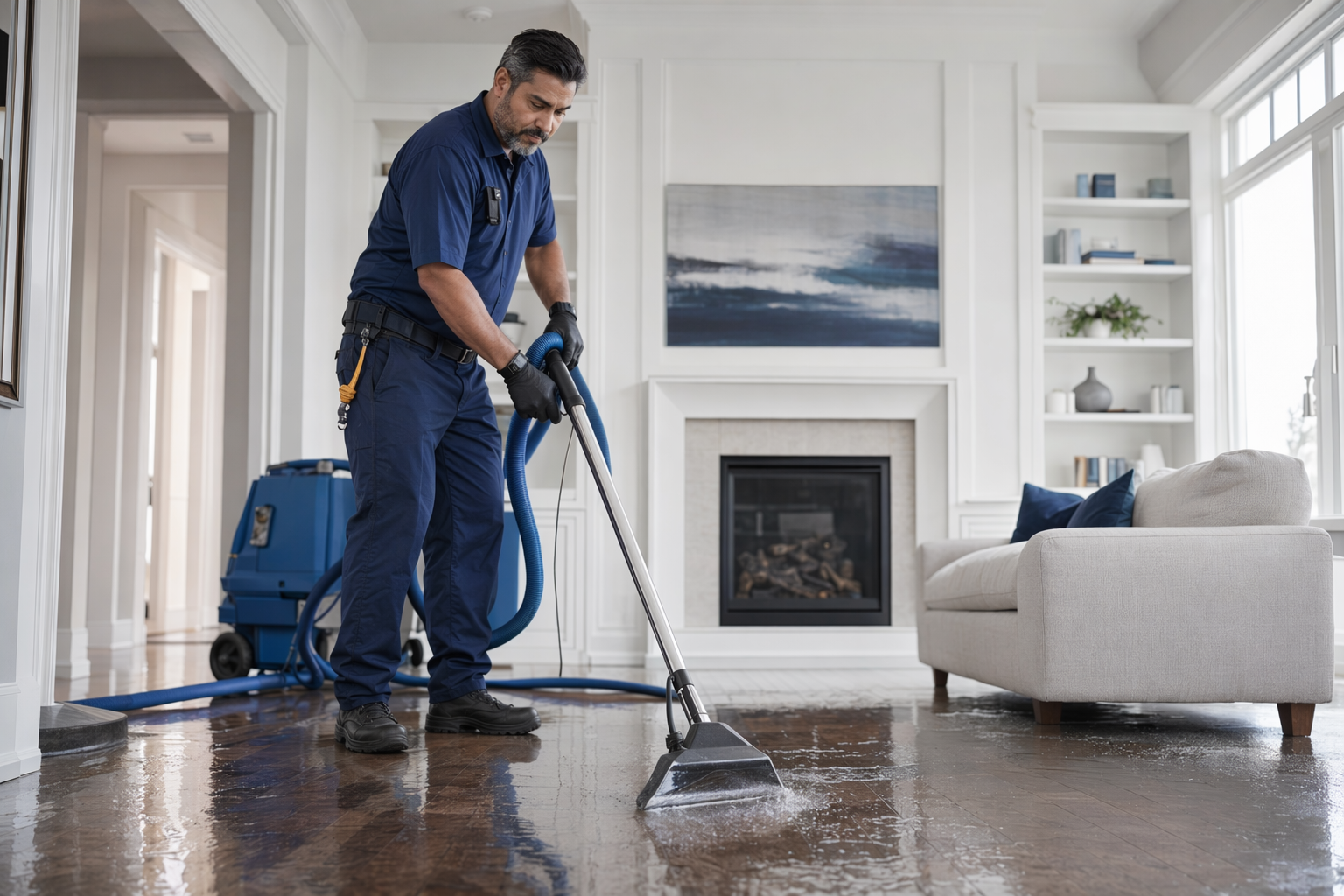
Responsibility usually begins with the source, meaning where the water came from. A burst pipe inside a wall, a leaking roof, an overflowing upstairs bathtub, a broken water heater, or a storm-related leak can lead to different insurance and repair questions. In many apartment situations, the building owner or property manager is responsible for fixing building systems such as roofs, plumbing lines inside walls, and shared areas.
But responsibility for damaged belongings is often separate from responsibility for the building repair. For example, a landlord may arrange repairs to drywall, flooring, or the ceiling, while a renter may need to use renters insurance for furniture, clothing, electronics, or other personal items. If another tenant caused the problem, that tenant's insurance may also become part of the claim process.
In general, landlords are commonly responsible for keeping a rental unit habitable, which means safe and fit to live in. That often includes maintaining plumbing, structural parts of the building, and systems they own. If water damage came from a failed building pipe, roof leak, or another issue the landlord was supposed to maintain, the landlord will often be responsible for arranging repairs to the apartment itself.
That does not always mean the landlord automatically pays for every loss. Laws differ by state, and leases can assign some duties in different ways. A landlord may be responsible for the repair work but dispute payment for damaged personal property, temporary housing, or losses tied to a delay. If the apartment is unsafe, ask the property manager in writing what they will repair, when mitigation will begin, and whether they will help with relocation or reimbursement.
Renters are usually responsible for damage they cause, such as leaving a tub running, failing to report a visible leak, or damaging a fixture through misuse. Renters are also generally responsible for their own belongings unless another party is clearly liable. That is where renters insurance can matter. It may help with damaged contents and, in some cases, additional living expenses if the unit cannot be lived in.
If you are a renter, review your lease and your insurance policy if you have one. Look for terms like deductible, which is the amount you pay out of pocket before insurance may contribute, and liability, which means legal responsibility for damage or loss. If English is not your preferred language, help may be available in your own language when speaking with your insurer, landlord, or a matched restoration professional.
First, put safety first. If water is near outlets, appliances, or your breaker panel, avoid the area and contact building management right away. If there is active leaking, report it immediately and document the date, time, and who you spoke with. Take photos and video of the source, the affected rooms, and damaged belongings before cleanup if it is safe to do so.
Next, try to limit further damage. Move items away from the wet area, use towels or containers if appropriate, and follow any instructions from building staff. Fast drying matters because mold, a type of fungus that can grow in damp areas, can begin developing within a day or two in some conditions. If you need help understanding your options, Steady Restore offers free educational guidance and can get you matched with certified restoration professionals near you.
Insurance and restoration are related, but they are not the same thing. Insurance decides coverage based on the policy, the cause of loss, and the facts of the claim. Restoration focuses on emergency water removal, drying, cleanup, odor control, and rebuilding when needed. A certified restoration professional can document moisture, affected materials, and the steps needed to reduce further damage.
Costs vary widely by the size of the loss, the materials affected, local labor rates, and how long the water sat. As a very general US estimate, professional water mitigation for a small affected area may start around $1,000 to $3,000, while larger or more complex apartment losses can run $3,000 to $10,000 or more. Rebuild costs for drywall, flooring, cabinets, or insulation are often separate. These are not quotes or guarantees, and actual costs vary by property, city, and state. You can learn more about the process in our guides or see common services.
Sometimes no one knows right away who is responsible. Maybe the leak started inside a shared wall, the upstairs unit was empty, or storm water entered through a part of the building no tenant controls. In those cases, it is common for several parties to investigate at once, including the landlord, one or more insurers, maintenance staff, and restoration teams.
If fault is unclear, keep your communication organized. Save emails, texts, photos, claim numbers, inspection notes, and receipts for anything you had to buy because of the damage. Ask for updates in writing. If you are not sure what to do next, review our what to do now page. Steady Restore is a free matching service for property owners and residents seeking certified restoration help; professionals pay a flat fee to participate, never a percentage.
Possibly, but it depends on the facts and insurance coverage. If the upstairs tenant was negligent, meaning careless in a way that caused damage, their renters insurance liability coverage may become relevant. The building owner and insurers may still handle parts of the claim separately.
Not always. Temporary housing may be covered by renters insurance under additional living expenses, depending on the policy and cause of loss. In some cases a landlord may offer help, but that is not automatic and can depend on state law, the lease, and the circumstances.
Often the party responsible for the building repair arranges drying for the apartment structure, but this can vary. Quick mitigation is important because delayed drying can make damage worse. A certified restoration professional can assess moisture and recommend drying steps, while insurance determines what may be covered.
No. We provide general educational information only and are not a law firm, insurer, or restoration contractor. We can help you understand the process and connect you with certified restoration professionals for documentation and cleanup support.
What to do if your basement floods Clear, calm, plain-language guidance from Steady Restore - an
What to do right after a house fire Clear, calm, plain-language guidance from Steady Restore - a
What to do when sewage backs up into your home Clear, calm, plain-language guidance from Steady
Free for property owners. Certified, insured pros. No pressure.