What to do if your basement floods
What to do if your basement floods Clear, calm, plain-language guidance from Steady Restore - an
Water damage can feel overwhelming, especially when you are trying to protect your home and deal with insurance at the same time. The good news is that a clear, step-by-step approach can make the process easier. This guide explains how to file a water damage insurance claim in plain language, what documents usually help, and when to contact a certified restoration professional. If you need help, Steady Restore is a free information and matching service for property owners, and help may be available in your own language.
Before you think about paperwork, make sure the area is safe. If there is standing water near outlets, wiring, or appliances, turn off power to that area only if you can do so safely. If you suspect structural damage, meaning the walls, ceilings, or floors may no longer be stable, leave the area and get professional help.
Insurance companies usually expect homeowners to take reasonable steps to prevent further damage. This is often called "mitigation," which simply means limiting additional harm after the loss. You might shut off the water supply, move dry belongings out of the area, or place a tarp or buckets to contain active leaks. Keep receipts for any emergency supplies or temporary repairs because they may help support your claim.
If you need guidance on urgent next steps, visit what to do now or learn more about water damage services.
Good documentation can make a big difference in a water damage insurance claim. Take clear photos and videos of all affected areas before major cleanup begins if it is safe to do so. Include wide shots of rooms and close-up images of damaged floors, drywall, furniture, and personal items.
Write down what happened, when you first noticed the damage, and any actions you took right away. If possible, note the source of the water, such as a burst supply line, an overflowing appliance, or roof leakage after a storm. Make a simple list of damaged items with estimated age and value. You do not need perfect records, but organized notes can help the claims process go more smoothly.
If materials stay wet too long, mold can begin to grow. Mold is a type of fungus that can spread in damp areas. Fast drying matters, so it is often wise to contact a certified restoration professional early, even while the claim is being opened. You can get matched for free with certified pros near you.
Once the immediate situation is under control, report the loss to your insurance company or agent. Many insurers let you file by phone, website, or mobile app. Ask for your claim number, the name of the person handling the file, and what documents they want first.
When you speak with the insurer, stick to the facts. Explain when the damage started, what was affected, and what you have done to prevent further damage. If you do not know the full extent yet, it is fine to say that. Avoid guessing about causes or costs before the damage has been fully assessed.
You can also ask whether your policy includes "additional living expenses," which means help with extra costs if your home is temporarily unsafe to live in. Coverage varies a lot by policy and cause of loss, so the insurer will need to review your specific situation.
Water damage coverage often depends on the source of the water and how sudden it was. In many homeowners policies, sudden and accidental water damage from things like a burst pipe or broken appliance may be covered. Damage from long-term leaks, neglect, or flooding from outside the home is often handled differently and may not be covered under a standard policy.
A deductible is the amount you pay out of pocket before insurance starts paying on a covered claim. Your insurer may also send an adjuster, which is a person who inspects the damage for the insurance company. The adjuster may review photos, inspect the property, and compare repair estimates.
Restoration costs vary widely by damage type, property size, materials affected, and local labor rates. In the US, smaller clean-water losses may sometimes run about $1,300 to $3,500, while more extensive drying, demolition, and repair work can range from $4,000 to $12,000 or much more. Sewage backup, contaminated water, or major reconstruction can increase costs significantly. These are only broad estimates, not quotes or guarantees, and actual costs vary by case, property, city, and state.
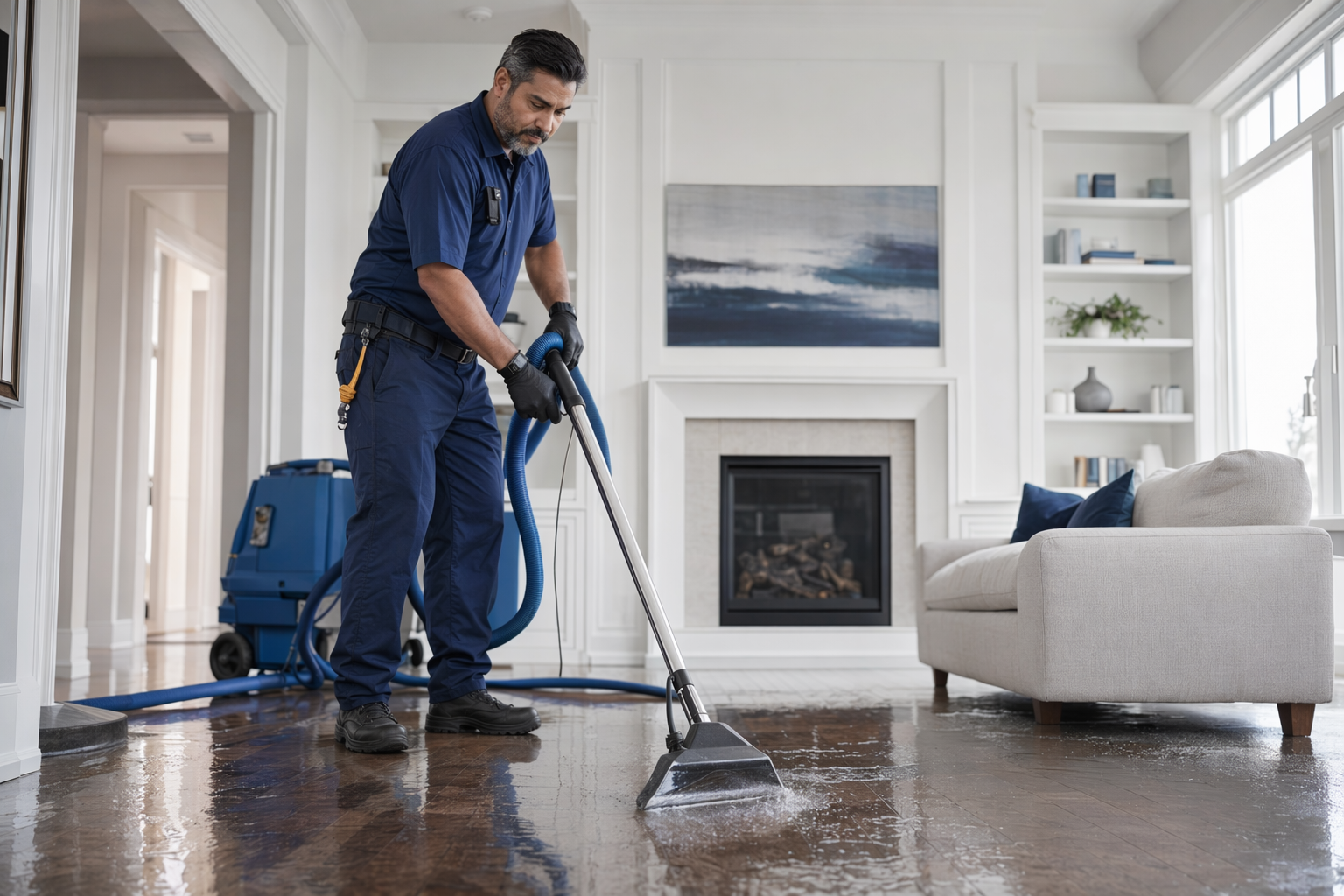
A certified restoration professional can help document moisture levels, remove damaged materials when needed, and set up drying equipment. Moisture meters are tools used to measure hidden dampness inside materials like drywall or wood. This documentation can be useful to both you and your insurer because it helps show what was wet and what steps were taken to dry the property properly.
Keep a claim folder with photos, videos, receipts, emails, inspection notes, and names of everyone you speak with. Save copies of estimates, work authorizations, and any payments you make. Staying organized can help if questions come up later about timing, materials, or the scope of damage.
Steady Restore is not a restoration contractor, and we do not provide legal or insurance decisions. We offer general educational information and a free way for property owners to connect with certified restoration professionals. If you want help finding someone local, you can get matched or browse more guides.
It depends on your insurance policy and state rules. Many policies require prompt notice, so it is usually best to report water damage as soon as you can, even if the full extent is still being evaluated.
Usually, no. You should take reasonable steps to prevent further damage, such as stopping the water source and beginning safe mitigation. Just be sure to document the damage well with photos, videos, and receipts before major materials are removed if possible.
Sometimes, but coverage varies. It often depends on what caused the water damage, how quickly it was addressed, and the details of your policy. Fast drying and clear documentation can be important.
Costs vary widely. In the US, smaller jobs may be around $1,300 to $3,500, while larger losses can be $4,000 to $12,000 or much more, especially if contaminated water or major rebuilding is involved. These are general estimates only, not quotes or guarantees, and costs vary by case, property, city, and state.
What to do if your basement floods Clear, calm, plain-language guidance from Steady Restore - an
What to do right after a house fire Clear, calm, plain-language guidance from Steady Restore - a
What to do when sewage backs up into your home Clear, calm, plain-language guidance from Steady
Free for property owners. Certified, insured pros. No pressure.