What to do if your basement floods
What to do if your basement floods Clear, calm, plain-language guidance from Steady Restore - an
A moisture reading helps restoration pros understand what happened and what to do next after water damage. Clear readings can guide safe drying, protect your home’s materials, and help you avoid costly surprises later. At Steady Restore, we provide calm, plain-language guidance—and a free way to get matched with certified professionals in the US if you need help. (We’re an information and matching service, not a contractor.)
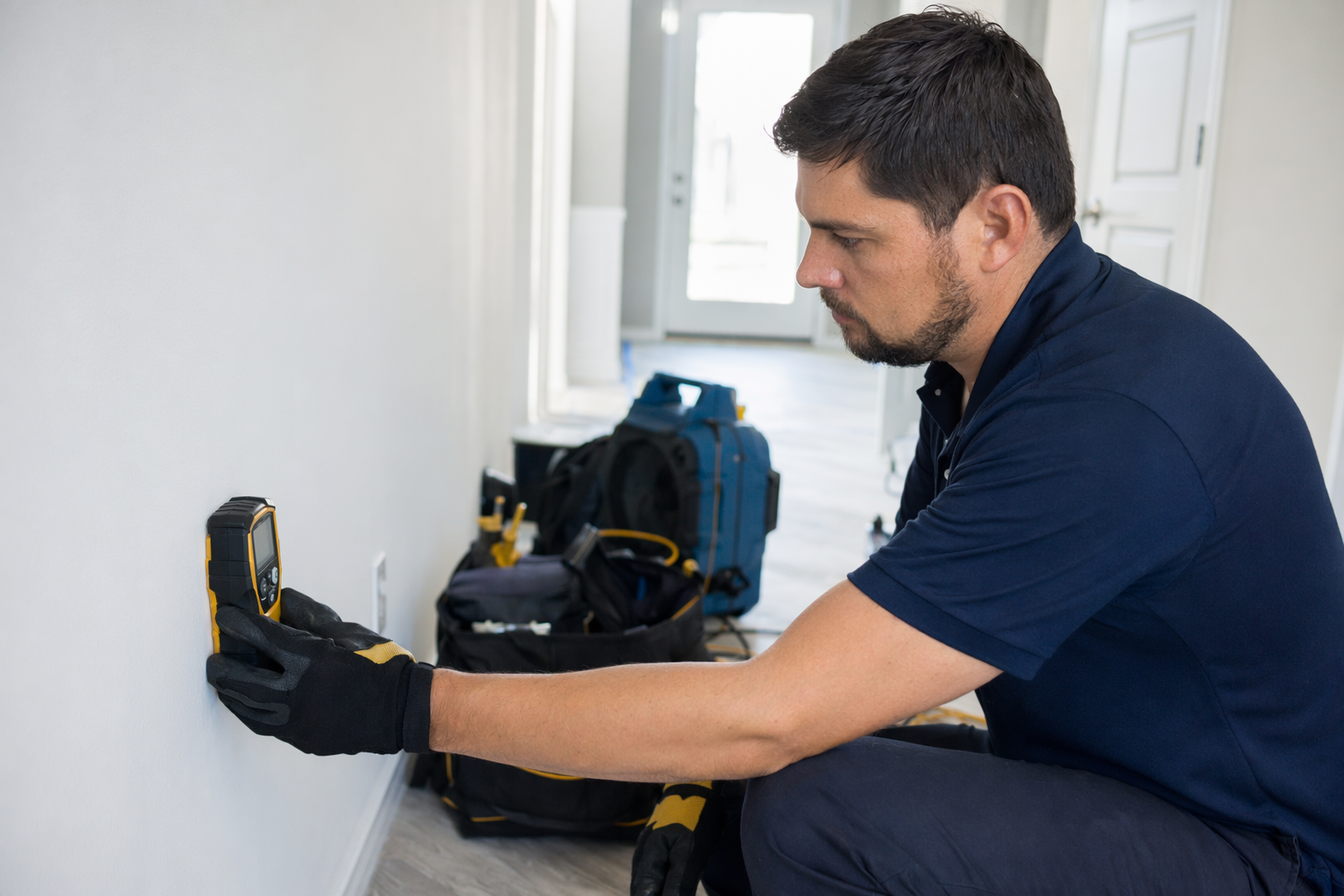
A moisture reading is a measurement of how much water is present in building materials like drywall, wood, flooring, or framing. Pros use tools such as moisture meters to estimate moisture levels, because water damage isn’t always obvious to the eye.
Moisture meters often check electrical “conductivity” in materials. In simple terms, wetter materials usually affect the meter’s reading. Sometimes pros also use temperature and humidity measurements, because indoor air moisture can influence how quickly materials dry. If you’re reviewing reports, ask what material was tested and what the measurement was meant to show.
Moisture readings help professionals make decisions that are safer and more reliable. For example, they can confirm where moisture is spreading, spot hidden wet areas behind walls or under flooring, and estimate how much drying is needed.
They also help track progress. Drying is the goal—not just running equipment. By re-testing over time, pros can see whether moisture levels are actually coming down. This can matter for preventing mold growth, limiting damage, and reducing the chance of repeat issues later. If you want a starting point, see What to do now.
A drying plan is the step-by-step approach to remove water and reduce moisture to safer levels. Moisture readings influence where drying equipment is placed, how long drying may be needed, and which materials may require special attention.
Readings can also help determine whether affected materials should be cleaned, dried, or removed. For instance, some materials hold moisture longer than others. A pro may test drywall surfaces, the cavity behind it, and surrounding materials to understand the full picture. Learn more about the general process at Services.
When a professional shares moisture results, you can ask a few simple questions: What materials were tested (drywall, studs, subfloor, etc.)? Were the tests done with a meter type suitable for that material? Where exactly were readings taken?
You can also ask how they will document progress—will they re-test at set intervals? If you’re concerned about timing, ask how they use readings to decide when drying is complete. For more education, explore Guides and consider using Get matched if you want certified help.
Often, yes. Small leaks can soak into materials you can’t see, like behind drywall or under flooring. A moisture reading can help confirm whether the problem is truly limited or if drying steps are still needed.
Moisture meters provide useful estimates, but “safe” outcomes can depend on material type, building conditions, and how the home is drying. Pros interpret readings together with other observations and may use more than one method.
Many pros take repeat readings over time, plus humidity and temperature checks in the drying area. This helps them see trends—whether moisture is actually dropping—rather than relying on one-time measurements.
Costs vary by case, property type, city, and state, and may change depending on the extent of damage. As a broad estimate in the US, moisture testing/inspection and professional drying services can range from a few hundred dollars to several thousand dollars. If major demolition, reconstruction, or extensive drying is needed, totals can be higher. For accurate pricing, ask a certified pro to assess your specific situation.
What to do if your basement floods Clear, calm, plain-language guidance from Steady Restore - an
What to do right after a house fire Clear, calm, plain-language guidance from Steady Restore - a
What to do when sewage backs up into your home Clear, calm, plain-language guidance from Steady
Free for property owners. Certified, insured pros. No pressure.