Emergency First-Hour Checklist
A free, printable checklist of the calm, safe steps to take in the first hour after water,
Use this free Mold Risk Self-Check to quickly look for signs that mold may be hiding in your home or business. It helps you organize what you see, what you smell, and which areas may need a certified mold professional to inspect.
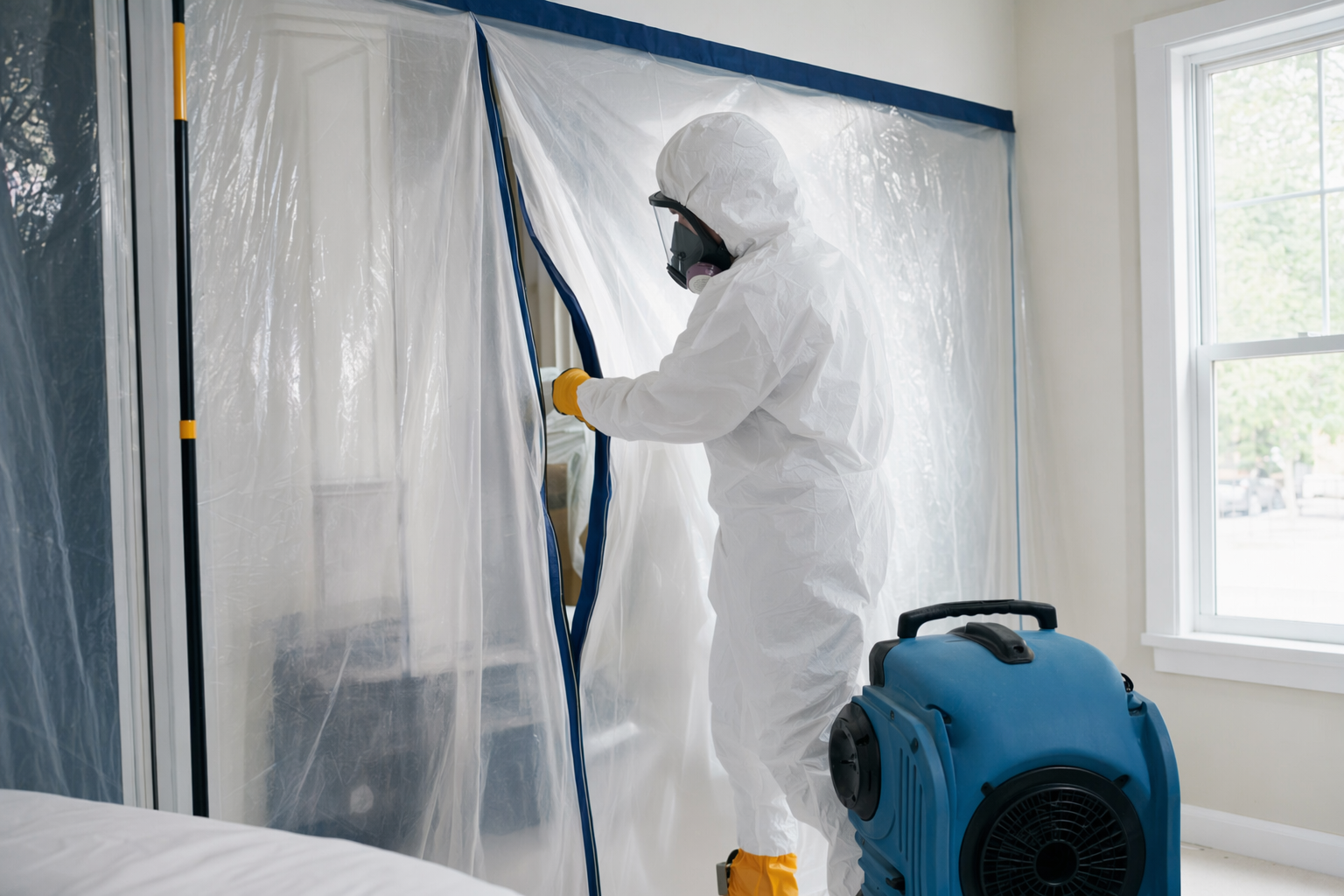
This checklist is for spotting common mold warning signs in plain language. It can help you think through problems like musty odors, visible growth, recent leaks, damp walls or ceilings, condensation, and areas that stay wet after a water problem.
It is not a test or a diagnosis. Mold can grow inside walls, under floors, in attics, crawl spaces, and other hidden places, so a room may look fine and still have a problem. The goal is to help you decide whether it is time to get a professional inspection.
Use this tool after a leak, flood, roof damage, sewer backup, or any time a room stays damp or smells musty. It is also useful if people in the building notice worsening odors or if you keep seeing spots return after cleaning.
If anyone has trouble breathing or the area has active water, electricity, or another immediate danger, leave the area and call 911 or the right emergency service first. This checklist is for general guidance, not emergency response.
The self-check asks about the size and location of the problem, where moisture may be coming from, how long the area has been wet, and whether the smell or spotting is getting worse. It also helps you note whether the damage is in a bathroom, basement, attic, kitchen, or another hidden area.
That information is useful when you contact a pro because it gives a clearer picture of the situation. Steady Restore is a free matching service, not a restoration contractor, and we help connect property owners with certified, insured restoration pros.
Mold work can get expensive when the problem is larger or has spread behind surfaces. Typical mold remediation ranges are often about $1,200-$6,000, but the real cost depends on the size of the area, the city and state, how much material must be removed, and how far the moisture has spread.
A short checklist can help you act sooner and describe the problem more clearly. The sooner the moisture problem is found and dried, the less likely mold is to spread to other areas.
No. It is a simple self-check, not a lab test or professional inspection. It helps you notice warning signs and decide whether to contact a certified mold remediation professional.
A musty smell can be a sign of hidden moisture or mold. Note where the smell is strongest, check for past leaks or damp spots, and consider getting a professional inspection, especially if the smell keeps coming back.
Typical mold remediation often ranges from about $1,200-$6,000, but larger or hidden problems can cost more. Real pricing depends on the damage, the property, the city or state, and the scope of work, so any number you see here is only an estimate.
Yes. Steady Restore is a free matching service that can connect you with certified, insured restoration pros. If you want help, you can [get matched](/get-matched/) and share basic contact details, your city, language, and the type of damage.
A free, printable checklist of the calm, safe steps to take in the first hour after water,
A free, interactive estimator that gives you a typical cost range for water, fire, mold or
A free, printable checklist to help you document damage and file a homeowners or renters i
A free, printable sheet of the right questions to ask a restoration company before you hir
Free for property owners. Certified, insured pros. No pressure.